

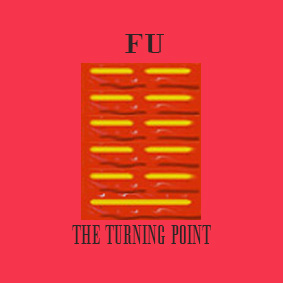
24. Fu; The Turning Point Above; K'un the Receptive earth Below; Chen the Arousing thunder
|
21st Century |
Comparisons |
| Chaos asserts and determines the order which to the
untrained eye is pandemonium. The time for everything comes. The crisis
point is the moment when bad becomes good, when negative turns around and
starts trending to the positive. Chaos governs order.
Order distinguishes chaos from entropy.
To make it to the end one has to put aside all negatives. Negative thoughts detract from the aspired destination. Don't go to the comfort of bad thoughts. Succumbing to desire then self chastising in remorse is a waste of time. To go over the weakness which put you there is of itself not enough. Therapy of itself is not enough. It has to be matched with action. And will. Such behaviours have their roots in the past. It is there the answer for errant behaviour will be found. Willingness to go into dark areas of one's early years will assist with the problems of self examination. Obstinacy is not a virtue by itself.
|
Line 1 |
Below are the comparative interpretations of a) Legge, b) Willhelm, c) Riefler, d) Crowley
a) returning (from an error) of no great extent, which would not proceed to anything requiring repentance. There will be great good fortune.
b) return from a short distance. No need for remorse. great good fortune.
c) Return after a slight mistake. Very auspicious. Without guilt
d) Correct small blunders - look for lucky wonders!
a) the admirable return (of its subject). There will be good fortune.
b) Quiet return. Good fortune.
c) Proud return. Auspicious.
d) Hast erred? return and take the proper way.
a) one who has made repeated returns. The position is perilous but there will be no error.
b) Repeated return. Danger. No blame.
c) Return again and again. Without guilt. Caution!
d) Return, return; go no more astray:
a) moving right in the centre (among those represented by the other divided lines), and yet returning alone (to his proper path).
b) Walking in the midst of others, One returns alone.
c) He leaves among others yet returns on his own.
d) Return, though all thy comrades say thee nay:
a) the noble return of its subject. There will, be no ground for repentance.
b) Noble hearted return. No remorse.
c) Noble return. Without guilt.
d) Nobly return - the Master of thy Day!
a) all astray on the subject of returning. There will be evil. There will be calamities and errors. If with his views he put the hosts in motion, the end will be a great defeat, whose issues will extend to the ruler of the state. Even in ten years he will not be able to repair the disaster.
b) Missing the return. Misfortune. Misfortune from within and without. If armies are set marching in this way, one will in the end suffer a great defeat, Disastrous for the ruler of the country. For ten years it will not be possible to attack again.
c) Confusion over returning; he goes astray. If he chooses to be aggressive his defeat will be far-reaching. Its effect will be felt even after ten years. Ominous. Guilt. Calamities.
d) But error piled on error - Deuce to pay!